Wednesday, September 1, 2004

New ways to feel lonesome

• Ballard-based singer releases “Reckless Burning”

By Steve Stav, for Ballard News Tribune, Seattle, Sept. 2004.

"The 'lonely' sound? I think it was always in me, though earlier on, I had been smitten with more 'rocked-up' stuff. Everything from the title to the concept of this record came from me going through a divorce, and Phil (Wandscher) leaving his band, Whiskeytown (a popular Raleigh, NC-based combo.) We (had) met each other at the right time in our lives...when we first started hanging out together, we were both estranged from our 'communities,' so to speak. We spent a lot of time alone, out in the wilderness fishing and camping; a lot of these songs come from being out in the open space. There was a lot of loneliness, there was a feeling of being very 'lost' in my own hometown for a period of time." -- Jesse Sykes

Sitting in the misty-yet warm spring air on Market Street, an apologetic Jesse Sykes was fumbling for words to describe her enchanting new album, Reckless Burning.

It was mid-afternoon (mid-morning for those in the music biz), she had had a fitful sleep, and hadn't had her coffee yet: nonetheless, the Ballard-based singer-songwriter was fielding questions rather eloquently.

She continued, "Yes, (the songs) are very 'lonely' sounding, but there's also hope and forgiveness. Ultimately, I was falling in love when a lot of them were being written; it was a weird time-I wasn't in a band, we weren't actively playing music-it was an absolutely pure, peaceful time. I didn't know that there was a record coming down the line; at the time, I didn't care.

"I began to get inspired to get in the studio, and had been saving money. I just wanted to do something creative, and to have fun...I think we got something that was much more than what we had anticipated."

Reckless Burning is much more than anyone could expect from a semi-unknown band gigging about town for a year. With a haunting blend of Cowboy Junkies-like lonesome sparseness with a lush, Chris Isaak-echoing, lonesome twang-the common ground here being 'lonesome' -- the record's desolate sound reverberates through the most tender parts of a listener's psyche. These nine narrations of heartbreak, longing and regret won't quite have you reaching for a bottle of sleeping tablets, but the disc does make you want to slide deeper under the covers, or pour another drink. Though the album's lyrics and concepts are her own, the upstate New York native is quick to credit her band, the Sweet Hereafter (the name inspired by an ethereal epiphany of a dream), with making her ideas come alive.

"Phil, Anne-Marie Ruljancich (the semi-legendary Walkabouts' violinist/cellist) and I began playing together-it started out with a little gig at the Sunset," recalled Sykes, whose slightly breathy, emotionally intense voice drifts through the album like a ghost. She added," When it came time to get more players, I just kind of chose people that I admired from afar (including Evangeline drummer Kevin Warner and Bill Herzog, who's worked with Joel Phelps and Neko Case) and they said yes. I'm honored that they wanted to be a part of it, and that they wanted to stick around afterwards. Without them, I couln't have done this."

Though each musician's talent is easily recognizable- from Wandscher's striking guitar style to Warner's subtle pulse-all of the disc's dark paths lead back to Tucker Martine, a local producer and musician whose reputation as a superb "facilitator" had grown in leaps and bounds in recent years.

"Tucker Martine is one of those guys who...any sort of vision that you have, or are aspiring to evolve, Tucker will push you in that direction and open it up," Sykes said. "The sound that Phil has one this record is much like on 'Reckless Burning,' the first song...that weird, echoing stuff (a fantastic use of feedback and reverb, reminiscent of whale songs) was Tucker's idea."

"That first song is sort of like my' movie soundtrack," the slender siren explained. "It's kind of clichéd -- 'Imagine driving down a dark road at four in the morning -- but it's based on a true story about Phil and I. We were camping, and it was getting dark; for some reason, we decided to take this 17 mile logging road that was supposed to connect back to the highway-and it didn’t. It got really scary...I was stupid enough to let him get us in that position-I should have seen what was going to happen. There was that freaky Northwestern darkness, and rain coming down. There were ravines, and trees across the road; we were in a pickup that could handle it, but...

"It was one of the most terrifying experiences, on one level, but it was also one of the beautiful experiences. I had just fallen in love, and I was right on the fence, thinking, 'I might die tonight, but I don't care-because I'm so in love.' That's why I named the record Reckless Burning', and put that song at the beginning; to me, the record is about vulnerability... and forgiveness, in whatever context it might be taken."

With such an attention-grabbing debut, Jesse Sykes (who refers to the Ballard Avenue regulars as her "extended family") joins an impressive list of country-inspired, Seattle -spawned female vocalists, including Christy McWilson, Neko Case, Evangeline's Jennifer Potter, and the Believers.

However, she's quite aware of the unlikeliness of lightning striking twice, of achieving another extended moment of clarity and passion that inspired this disc.

"This record was like... fate," she said after a few moments of thoughtful silence. "There's part of me that's a little scared (about recording again), because there was something very magical about this (CD)... but, then, there's another part of me that thinks that there could be a continuation. I wouldn't want it to be an identical thing, but it could be sort of a 'sister' record, to some degree. Some of my new songs are coming from that residual energy... I'm still on a 'high' from making this record -- we all are -- and hopefully, we can tap into that energy again."


Jesse Sykes & the Sweet Hereafter • Reckless Burning • 2002 • Barsuk Records


Originally published in the Ballard News-Tribune, Seattle, Sept. 2004.

copyright 1997-2011, Steve Stav

Wednesday, June 4, 2003

Former Toad singer goes it alone

• Former Toad the Wet Sprocket frontman Glen Phillips is finding his way with a full-time solo career.

By Steve Stav, for the Ballard News-Tribune, Seattle, 2003.

"It was something I wanted to explore, and a necessity," says singer-songwriter Glen Phillips of his post-Toad the Wet Sprocket, solo-acoustic act. "If I tour with a (backing) band, I don't get to pay the mortgage; if I tour solo, I can make a living," he added, chuckling.

Phillips, 32, is still going through the time-honored process of coming to grips with the breakup of a band. His struggles are a little more unique than most of his former frontmen, now solo artist peers, in that he spent half of his life with his band, a group that reached awe-inspiring popularity levels and chart positions.

Phillips was a-high-school freshman when Toad was spawned from a group of drama students (the other three were seniors); in 1988, the enterprising quartet sold their self-produced first album, a tape, actually -- around their hometown of Santa Barbara, until it caught the attention of Columbia Records. A decade of albums followed, with radio-friendly songs such as "All I Want" and "Fall Down" propelling the band to international stardom.

His early "do it yourself" experiences and education came in handy when Phillips launched a full-time solo career after Toad's breakup in 1998, though the singer admits that he "also got very used to being 'taken care of' by the end of Toad." He adds, "After that, I wasted about a year with management telling me to write the 'no-brainer' so I could do the song that wouldn't be anybody's actual favorite, but one that an A&R guy might like, so I that I might get signed -- even though I was old, old, old at 30."

After a moment's contemplation, the affable husband and father of three says, "I've been forced into the conclusion over and over again that the only way to make anything happen is to do it myself. Which is difficult for me, because I don't like being a businessman. With Toad, all I had to do is write songs and sing them!

Phillips was recently thrust back into the role of superstar-band-frontman when he and his Toad bandmates reunited for a Santa Barbara benefit show. One concert turned into several, and then the affair snowballed into a 24-date, late-winter tour. Though the singer-songwriter obviously enjoyed playing again under a much larger spotlight, Toad's shaky undercurrents soon reminded him of how the group dissolved to begin with.

He explains, "We broke up for the same reasons that break most bands up: egos, entitlement, irreconcilable differences, you name it. Enough time had passed that we thought it was possible [to work together], and everybody was a lot more grateful for what we had had... but I felt like I spent a lot of time putting out fires. I'm sure the other guys could give you a laundry list of what I did to make them angry!

"They're all fine guys," the singer quickly adds, "We gave it our best, but I don't think it's 'doable' again... It was great for everybody to get a little touch of the past, but there wasn't a lot of passion for moving forward."

Phillips, having re-adopted that "DIY" attitude, is constantly moving forward. His new CD, Live at Largo, will, with any luck, accomplish two enviable goals: to satisfy his legion of Toad fans, and to introduce himself to an audience wholly unfamiliar with his previous work.

In a set sandwiched and peppered by elegant somberness -- Greg Brown's "Small Dark Movies" and his own "Sleep of the Blessed" bookend the disc -- Phillips dazzles the listener with his inventive songwriting and prowess with acoustic guitar. With an earnest and unpretentious voice, he breathes life into the usual gamut of themes -- from love and loss to missed and realized opportunities. However, the singer shines brightest when he's tackling shades-of-Billy Bragg, front-porch social commentary, laced with a humor entirely his own.

Phillips' instant classic, "Fred Meyers" -- a post-apocalyptic vision of suburbia, where large chain stores have been converted to communal living spaces -- is a prime example. Another standout is "Drive By," a suburban Gothic tale about a boy forced to accompany his father on a mission to eliminate a troublesome neighborhood dog. Simultaneously horrific and hilarious, the song was inspired by a story once told to Phillips by his friend Ben Folds.

The troubadour has also recently taken a solo stab at songwriting for film -- he was commissioned to write the song, "Departure," for James Cameron's Titanic documentary, Ghosts of the Abyss. The experience emboldened Phillips, who says, "There's fewer and fewer pieces of good music on the radio -- it's a very narrow point of entry and very expensive right now. The great thing about film and TV stuff is that they pay you, and pay you well."

He continues, "There is a demand for unsigned artists without big publishing deals, because the major publishing companies are really expensive to deal with.

“Look at Aimee Mann -- she's an indie artist who got a huge piece of the 'Magnolia' soundtrack."

Right now, his reputation as chart-topping frontman is an inescapable one. But does Phillips yearn for the day when his concert handbills can omit the words "Toad the Wet Sprocket"?

"Absolutely. There's nothing wrong with it, I'm really proud of what we did," he emphatically states, adding, "I realize that I haven't put out enough material -- I've recorded four albums and released two. So, I haven't proven myself to the outside world in any way. But to feel good about what I'm doing [solo], that's enough for me."


Glen Philips • Live at Largo • 2003 • A2. Management 


Originally published in the Ballard News-Tribune, Seattle, 2003.

copyright 1997-2011, Steve Stav

Wednesday, December 18, 2002

Will play for food (drive)

• Vancouver, B.C. favorites get audiences into the spirit of the holiday season with an exchange food-for-CDs drive.

By Steve Stav, for the Ballard News-Tribune, Seattle, 2002.

Vancouver B.C. "Celtic bluegrass" sensations the Clumsy Lovers are making holiday donations of the most altruistic kind. Not only have they recorded some great Christmas music, but the band is giving it away at their concerts. Well, not giving it away, technically; they're trading the discs for food or money in order to feed hungry families.

"In the jam-band scene that we sometimes get associated with, they support a lot of food drives and environmental issues and so forth — especially at Christmas time," said the Lovers' ace fiddler, Andrea Lewis, from a Kinko's in Boulder, Colo. — where the road-weary group was printing more concert flyers. "But it doesn't always seem that the bands themselves are giving something of themselves, other than pushing these organizations. We couldn't afford to play a month of free shows, but Chris (Jonat, the Lovers' leader, bassist and idea-man) thought that we could cover the cost of going into the studio and putting out a two-song CD."

A Very Clumsy Christmas features two numbers destined to be perennial favorites. The first is a stunning version of Robbie Robertson's "Christmas Must Be Tonight," reworked in Clumsy Lovers-by-way-of-the-Pogues style -- followed by "Snoopy's Christmas," a bluegrass-fueled mish-mash of Peanuts tunes, including "Snoopy vs. the Red Baron."

"We're pretty happy with [the CD], we went into the studio and banged that out in half a day," Lewis half-hoarse from a nasty cold, commented nonchalantly. "We had a friend [Amy Stephen] come in and play accordion and tin whistle. We had talked beforehand about what we wanted to do, it was pretty relaxed -- no pressure."

The Lovers' amazing Christmas offering caps a triumphant year for the quintet, which also includes drummer Devin Rice, vocalist-guitarist Trevor Rogers, and recent-recruit Jason Homey, an award-winning banjo picker who has enhanced the group's bluegrass leanings.

The band has spent much of the last 12 months on the road supporting a stellar album of cover tunes that have been gig staples and fan favorites. Under The Covers With The Clumsy Lovers reflects the group's quirky, frenetic formula that has made them one of the Northwest's most popular live performers -- the top-notch musicians wander all over the pop-music map, re-inventing everything from Paul Simon's "That Was Your Mother" to Lynyrd Skynryd's "Sweet Home Alabama," to two Beatles songs, two Pogues numbers, and even the J. Geils Band's "Centerfold." Even the CDs cover is a clever take on nostalgia -- the band was photographed sleeping under the Canadian flag, in homage to the Who's The Kids Are Alright album. Lewis, a classically-trained violinist who wasn't previously familiar with the Who's classic cover art, remembers the photo shoot well.

"Flags are expensive -- that flag was $500, but you could rent it for $75," she said. "When we rented it, the lady at the shop asked what we were using it for. She said that that was fine, but that we couldn't take it outside. We said OK, but of course, the photo shoot was outside. We were very paranoid about not getting our shoes on the flag or anything. We carefully folded it up and Chris took it back...The lady began inspecting the flag, she opened it up and there were three pieces of grass in the folds!

"At that point, Chris was sure that we had a $500 flag, but she let it go," Lewis, the group's most attention-getting member, added.

At press time, the Clumsy Lovers had just concluded a nine-week tour that took them from their B.C. stomping grounds, through the West and Southwest, to the East Coast for their first-ever New York City performances, in which the band was enthusiastically received. The do-it-yourself dynamos will be taking five days off for Christmas before a playing a big New Year's Eve show.

The band will be back in the studio in January, starting work on a much-anticipated new collection of original songs that Lewis described as "taking five times more money and time" to make as their previous records. For the time being, though, the Lovers are thoroughly enjoying performing during this holiday season.

"People have been really receptive," Lewis enthused. "In Boise, for example, people donated about 250 pounds of food and something like $225. We went through over 150 CDs there.

"We're having a lot of fun," she added, "I don't think we've ever played Christmas music before."


The Clumsy Lovers • Under the Covers • 2002 • Clumsy Lover Records


Originally published in the Ballard News-Tribune, Seattle, 2002.

copyright 1997-2011, Steve Stav

Wednesday, September 18, 2002

From Austin to Austin

• Martin Zellar’s heart remains in Minnesota

By Steve Stav, for Ballard News Tribune, Seattle, Sept. 2002.

Singer-songwriter Martin Zellar lives in Austin these days, but his heart remains in Minneapolis. Zellar enjoys a sort of icon status there; in the late '80s and early '90s, his Twin Cities-based band, the Gear Daddies, developed a huge following that still exists today. Following a brief ride on the fame roller coaster (which included their hit "Zamboni" appearing in the films "Mystery, Alaska" and "The Mighty Ducks"), the Daddies dissolved, with Zellar continuing on with a backing group, the Hardways (Dan Neale - guitar, Scott Wenum - drums, childhood friend and Daddies bandmate Nick Ciola - bass).

Zellar and the Hardways frequently play in Minneapolis, the Northernmost city of a circuit that begins in the Lone Star State. The singer also occasionally haunts Minneapolis and the midwest with his wildly popular Neil Diamond tribute act, Neil!

Zellar's addictive new album, "Scattered" (OwenLee Records), demonstrates his ability to capture a working-class everyman's bouts with loneliness, longing and self doubt -- and often resolves them with renewed determination or optimism.

"Scattered" is essentially an Americana record, with dollops of honky-tonk and Minneapolis barband brushed on in spots. It's also a handful of musical snapshots of Zellar's life -- which began in the dreary, small, meat-packing town of Austin, Minn.

SS: You play music, you have a wife and two kids, and you don't have a day job. What is there to be depressed about?

Zellar: I think part of it is just genetic -- I was a melancholy child, to put it mildly. And, the way I grew up wasn't exactly the "Cleavers." My dad was in the hospital pretty much non-stop from the time I was in nursery school, and subsequently didn't have a lot of money.

The other part of it is that I don't sleep well, and I tend to write in the middle of the night when no one else is around -- you tend to get introspective at night. But I don't think my song writing is indicative of my overall personality.

SS: Scattered is your first album in four years. What were you doing in the meantime?

Zellar: I've been playing a lot, but a lot of it is laziness. I'm not a big fan of the studio ... I tend to put it off. I had written a lot of songs; when we went in (to the studio), we recorded two CD's worth of stuff ... the songs that ended up on "Scattered" was definitely the more introspective of the bunch. They seemed to fit together, thematically.

SS: Did you go to Minneapolis to be a musician, or to just get the hell out of Austin?

Zellar: I went to Minneapolis just to get out of Austin, period. Music was certainly something I dreamed of, but I didn't think of it as a possibility

Growing up in Austin, you just didn't think that that kind of thing is a possibility. I listened to a lot of music as a kid... I just didn't dream that it would become a reality for me.

SS: Was the Replacements' success an, influential or motivating factor for you?

Zellar: Yeah, definitely ... in more ways than one. I saw them play — I thought, 'Wow! This is a band that does what they do and saying, 'Take it or leave it.'" To be brutally truthful, the only reason the Gear Daddies ever got signed was that there was so much attention focused on Minneapolis at the time. Seattle certainly went through the same thing. At the time that we got signed, there was the Replacements, Husker Du, Prince, Soul Asylum... it was such a hot spot, labels were sending A & R men to Minneapolis and saying, "Sign a Minneapolis band."

We were at the proverbial right place at the right time ... there was no reason for us to be signed to Polygram, we weren't a major-label band. We just didn't fit into the system, and that became apparent almost right away. I don't regret it -- we toured, we got on Letterman, we got some cool equipment; but, at a certain point, it seemed like we were running in place.

SS: Music is a very curious business these days.

Zellar: (laughing) You said a lot there, man.

SS: I meet so many artists who had some big-label success at one time, but musically, are much better now. And, as far as Americana or whatever goes, you have Ryan Adams getting a ton of airplay, while there's a million guys out there playing club circuits that can blow him away.

Zellar: I started out on the smallest label you could find, in Minneapolis; then we got signed to this behemoth -- Polygram; then went to Rykodisc -- which is, depending on how you look at it, either a small major or a really big Indie; and now I put out CDs on my own. So, I've been at every level in this business. What I haven't been is "huge."

People that I know who have been through that -- like Soul Asylum -- I feel terrible for them. It's the ultimate double-edged sword. You get up there, and then where do you go? The number of bands that reach that level is tiny, and then the amount of bands who manage to stay up there is almost non-existent.

SS: Was your move to Austin a business decision?

Zellar: No, definitely not. My wife and I were both raised in Austin, Minn. We had just reached a point in our lives ... the winters were just beating me down. Not only the cold, but those January-February days when the sun just doesn't come out.

Over the years, I'd been through Austin, Texas a bunch of times, and it seemed to stick out from the other cities we stopped at on tour. My wife and I went down there once and found a house that we loved, and put a bid on it -- our move was impetuous, to put it mildly.

SS: At what point did you reconcile the "Cracklin' Rose" Neil Diamond with the sell-out, "Love On The Rocks" Neil Diamond?

Zellar: (Laughs) I don't. My love of Neil Diamond includes recognizing that it's pretty funny, too. The whole thing started out as a joke, period. Way back when, Soul Asylum was playing a gig, and we thought it would be really fun opening for them doing this Neil Diamond thing.

We fully expected to be objects of scorn, that it would be like some Andy Kaufman routine where people would just hate our guts. But they loved it..,. we did it a few more times, and then it took on a life of its own. Now, it keeps us busier, and everyone can pay their mortgages a little easier because of the extra gigs.

It works because it's funny at the same time -- there's some great pop music, but there's a sense of humor as well. I've seen Springsteen tributes, and they don't work as well, because they're too serious about it. At our shows, there's huge Neil Diamond fans, and then there's people who are laughing hysterically; it works at both levels. 


Originally published in the Ballard News Tribune, Seattle, Sept. 2002.

Copyright 1997-2011, Steve Stav

Saturday, June 1, 2002

The shit from Shinola

• An interview with Seattle’s Americana sweethearts, Shinola.

By Steve Stav, for Backfire magazine, Seattle, 2002.

When it comes to making music, there are basically two types of artists --those who record their compositions and then wait and see if a critic or label exec "discovers" them, and those who record and then venture out to make things happen, or die (or, at least, go broke) trying.

Seattle-based Shinola, a band steeped in the performing precedents set by Springsteen and Petty's Heartbreakers, are artists of the latter variety. While their recording career hasn't been consistent (their first full-length, the '80s-bar-band-echoing Lucky Stars, was released in December) Shinola, by means of sheer persistence, has achieved some enviable feats over the past couple of years -- including playing the Gorge Ampitheatre's second stage twice and climbing their way to the top rung of a Lucky Strike-sponsored "Battle of the Bands" series.

Formed more than four years ago by whip-smart, half-Canadian, quasi-rednecked brothers T.J. and Kyle Martin, Shinola eventually recruited punk-rock bassist Kevin McGregor, an Arizona native and former semi-pro footballer with the delightfully lazy demeanor of a Carolina hillbilly. More recently, Mike Nelson, who has played in a number of Seattle bands over the last 15 years, has replaced their old friend Michael Bailey on drums.

Widely respected in Seatown's music community for their integrity and kindness, Shinola is also known for its sense of humor. Their banter is peppered with a seemingly continuous patter of put-downs -- the fine art of the insult seems to be an integral part of their communication with one another. And given this band's intellectually schizophrenic makeup, a typical conversation with them can cover topics such as politics, economics, samurai philosophy, deer season do's and don'ts, and the religion of NASCAR. However, as Classic VHI's forgotten videos flickered in the background, I steered the quartet towards the equally-fascinating realm of rock 'n' roll.

SS: You're always 'workin' it, hustling for gigs and so on -- when didyou start being so aggressive, business-wise?

TJ: After El Camino (the band's second EP), we very quickly came to realize that we weren't going to get any more people to our shows, we weren't going to get any better shows ... nobody walks into the Crocodile on a Thursday night and says, 'These guys are awesome, I'm going to make them famous!' We figured that if we wanted to get further along, if we wanted more than 50 to 100 people coming to our shows, we had to do it ourselves. There was no managers, no publicity agents, no booking agents that were doing anything for bands that didn't already have something going on. We learned everything by trial-and-error.

Mike: It's a basic attitude that you have to have ... we're the ones that have the most at stake. Either you go out and work and bust your 'nads, or you sit around and wait for someone to do it for you.

Kyle: The biggest thing that happened to Shinola -- as far as getting shows, making records and so on -- is getting a solid line-up. You can't go on the road until you get people that want to get in the van and do it -- and consistently do it.

T.J.: This is the first time we put out a CD where all of the same band members recorded the album, played the CD ielease party, and worked on everything that happens from there.

SS: This new album has got a great 'live' sound. How did you avoid going overboard with production?

Kyle: What's funny about Lucky Stars is that we captured what Shinola really is about -- we did these intense recording sessions; we didn't string it out. From recording and mixing to mastering and pressing, it took about four and a half weeks -- Bam! just like that, we had a CD in our hands. [Avast Studios engineer] Kevin Suggs has worked with us before, and he knew just what we wanted.

[Joan Jett's "Bad Reputation" video appears on the TV]

Kyle: Joan Jett is totally cool.

Kevin: You won't see a girl like Joan Jett in Seattle.

SS: The thing I miss about the old days in Seattle is the grittiness -- the new money that came in washed everybody that looked like Joan Jett out of downtown.

Kyle: I was down by Pacific Place the other day, and I thought, "I am so underdressed here."

T.J.: Keep in mind, Kyle was wearing his John Deere hat.

Kyle: But the point is, everyone downtown seems to shop at Eddie Bauer --they're all dressed alike. It didn't used to be that way.

Mike: Unless you're a yuppie, you can't afford to live downtown.

SS: Who thought of the name 'Shinola'?

T.J.: I thought of the name. We had been going by the name of 'Shiner' before Gator Meat [their debut EP] came out. But there was a band out of Kansas City called 'Shiner' that was getting a lot of press and attention. We were talking to local booking agents that were asking if we were the Shiner from Kansas City, in our own hometown! So we decided that things had to change before we put the CD out.

SS: Did you take it from that old expression 'You don't know shit from...' or from the shoe polish company?

Kyle: Well, that's where 'You don't know shit from shinola' comes from... it was an expression that our dad used to say to us all of the time. We later found out that it referred to shoe polish!

T.J.: We went down to the UW School of Engineering, where you look up patents and such, and we looked up different names. I thought of 'Shinola,' and found out that no one had the copyright on the name to sell recorded material. An interesting little fact: we later had to have a lawyer send a note down to a band in Nashville going by 'Shinola'-Dolly Parton's nephew was in the group, and she actually sang on their CD.

SS: In retrospect, what was the best thing about your Lucky Strike odyssey?

(The band, simultaneously): Our van and trailer.

Kyle: We had a broken down old van, and we were thinking of how we were going to get a new van. All of the sudden, boom! Lucky Strike comes along and gives us money to travel -- supposedly money to fly and to rent gear with -- and instead we boughl a van and trailer.

T.J.: Thank you, Big Tobacco! Lucky Strike has a bold, yet smooth flavor!

SS: But none of you smoke...

T.J.: Well, yeah... the other great thing about that deal was getting to play the House of Blues on Sunset Strip and the Great American Music Hall in San Francisco. We played with a great band out of LA called Sunchild. But the best thing about that whole experience was, after it was all over, we still had that van and trailer.

SS: Kevin, what's your New Year's resolution? To quit drinking?

Kevin: [Reclining and seemingly half asleep, McGregor is nearly incapacitated by a bad cold] Nah, I really don't drink much. I guess it would be to get back into "football shape."

Kyle: You say you don't drink much, yet there's a glass of whiskey in your hand.

What is the band's New Year's resolution?

T.J.: We're gonna play a shitload of shows.

SS: Given this country's suddenly patriotic fervor, and in lieu of another Springsteen 'Born In The U.S.A.' tour, I take it that you're taking your encapsulated 'arena rock' act on the road?

T.J.: [laughing] We're an 'arena-rock' pellet.

Kyle: [laughing] Just add 'arena,' and you've got your 'arena rock.'

SS: But would it be fair to say the U.S. needs rock, and you're there to give it to 'em?

T.J.: Well, there's always been rock bands out there, and people into it. But what's happened is that a lot of people have gotten into other types of music, a lot of fluffy stuff you hear on the Top 40. But the wheel goes around, and rock is coming back.

SS: Music is generally considered a 'liberal' medium...

Kyle: Don't tell Ted Nugent that.

SS: So I find it odd that so many musicians have jumped on the patriotic bandwagon, a lot of them who, in any other time of military action, would be protesting in the media.

Kyle: I'd like to get something right out on the table -- when September 11 happened, we were right in the middle of recording Lucky Stars. The concept of the album cover -- the stars-and-striped pants [Nelson's Evel Knievel leather trousers], the colors -- that was done before that happened. Actually, we had a meeting about the cover a long time ago -- we decided that we were tired of people bagging on America, that it's time to bring rock, and being proud to be American, back in style. It's so unfortunate that it took such a terrible thing like September 11 to wake up some people, to make them realize that America is an incredible country to live in, that they're lucky to be here.


Originally published in Backfire Magazine, Seattle, 2002.

copyright 1997-2011, Steve Stav
Wednesday, November 7, 2001

Back to the future with Little Bill

• During his 44 year career in music, Northwest rock pioneer Bill Engelhart has constantly reinvented himself.

By Steve Stav, for The Enterprise Newspapers, Lynnwood, 2001.

Although Bill Engelhart -- known since childhood as "Little Bill" -- is one of the pioneers (many say the pioneer) of Northwest rock 'n' roll, the Mountlake Terrace-based singer, bassist, and author doesn't live in the past much -- he can't afford to.

"I've never taken anything for granted... several times, I've thought, 'If it ended right now, I couldn't say that I haven't gotten enough [recognition],'" the slight, 62-year-old musician said from a chair in his plaque-and-record-adorned den. As Engelhart calmed his attention-starved Boston Terrier puppy, he continued, "I've always been grateful for anything that I get... so when people come up to me after a gig -- and thank God that they do -- and say something like, 'I first saw you 30 years ago, and I want to see you again -- I really enjoyed it,' that means a lot to me. You see, I don't play the same stuff I did 30 years ago -- I can't, I have to grow -- and to hear that they weren't disappointed, that's really something."

During his 44 year career in music, Little Bill Engelhart has constantly reinvented himself -- from teenaged R&B bandleader (he formed little Bill & the Bluenotes in 1956) to young pop crooner (his only hit, 1959's "I Love An Angel," led to tours with the like of Roy Orbison, The Ventures and Ricky Nelson), to down-and-dirty, dive-bar bluesman in the ‘60s and ‘70s. Though some critics have opined that his gravelly, hard-times-echoing voice is most suited for the blues, the 21st century incarnation of Little Bill is a diversified performer who doesn't stick to any one particular genre.

"I don't do 'all-blues' anymore... actual blues, 12-bar blues, I might play a couple during a set," he stated, "I don't want to be labeled -- I never wanted to be tagged as a rock 'n' roll singer, I never wanted to tagged as a blues man -- I just want to sing. So well do anything from the traditional -- 'Stormy Monday Blues' to 'Bye Bye Blackbird' or 'Johnny B. Goode.' It depends on the audience -- I want them to have a good time."

The self-effacing singer has another method to keeping his audience -- and his band -- on their toes, a method he learned from watching B.B. King during a five-night opening gig years ago at Seattle's long-gone Trojan Horse.

Engelhart explained that "No one in the band but me knows what the next song is -- and I don't either, until just before I call it.

"B.B. told me, 'Watch the crowd, you'll know what to play,'" continued Englhart, who, along with fellow Bluenote and lifelong friend Buck Ormsby, first met King at Olympia's Evergreen Ballroom in 1957. "Heck, the guys in the band don't know who's going to solo next until I look at them. It might sound like I'm a control freak, but that's not my reasoning -- I want to keep our sets interesting for the audience."

The Bluenotes' current lineup have enabled Engelhart to produce his finest body of work -- his most recent CD, "Naked Blues." Stripping away the usual horn section, Engelhart reduced the band to an trio -- himself, drummer Tommy Morgan (who's played with Little Bill since 1962) and master guitarist Mark Riley, a Bluenote veteran of six years. The result is a gritty, acoustic sound that is unbelievably authentic -- full of bottlenecked axe, brushed skins and Engelhart's road-worn yet powerful voice. Ironically, "Naked Blues" is sort of an accident -- it was recorded live in the studio, during a casual day's session to make a demo disc.

"I really believe it's the best record I've made since 'I Love An Angel,' and it's the most accepted, in terms of sales," Engelhart said. After pausing a moment, he added, "I don't think I'll record again. Without sounding too dramatic, I feel in my heart that It's the kind of recording that I've tried to make for years. It like my book (Engelhart's riveting autobiography, Next Stop, Bakersfield, now out of print) -- people ask me, Vhen are you going to write another book?' I'm not... I've said everything I wanted to say."

Oh, Little Bill Engelhart lives in the present and looks to the future, all right -- he plays around 150 gigs a year to audiences that are simultaneously getting older and younger. However, he's not yet tired of telling a tale or two when prodded; the Northwest legend, naturally, has a lot of stories bouncing about upstairs.

From his wheelchair onstage (victimized by polio as a child, he finds a chair the most comfortable means of performing), Engelhart might tell you the story of how he and Ormsby “discovered” another Northwest legend, the late "Rockin'" Robin Roberts, singing on a park bench at the Puyallup Fair. Backstage, packing the treasured bass that Riley once handcrafted for him, the singer might relate the tale of how Ormsby, then with the Wailers, found out that Engelhart had recorded, "Louie, Louie" -- and rushed to release his band's version before Engelhart did. Fishing a puppy treat from his pocket, he'll tell you how he wound up playing billionaire Paul Allen's super-secret birthday cruise in Alaska almost 40 years later.

Perhaps his best -- and most enlightening -- anecdote is this one, told from his Mountlake Terrace home, many miles (and seeming light years) from his boyhood home in a town whose famed "Tacoma sound" he helped create decades ago.

"In the old days -- when I was in my early 20s -- we used to go down to what was called 'Lower Broadway' in Tacoma and play music -- it was the 'black area' of town," Little Bill recalled with a grin. "It was like going to school... the bars, the pool halls and restaurants -- I loved everything about it, and the fact that I was accepted there..."

Years later, while on a trip to Seattle (he had moved all about the Southwest), Engelhart had an inspiration. "I decided to pull off the freeway and revisit Lower Broadway -- except it wasn't there anymore.

"The pool halls, the juke joints -- the buildings themselves were all gone," he explained, concluding, "I think about what good times those were... but then I think, 'Nothing lasts forever.' Things change -- that's part of life."


Originally published in The Enterprise Newspapers, Lynnwood, 2001.


copyright 1997-2011, Steve Stav


Saturday, September 1, 2001

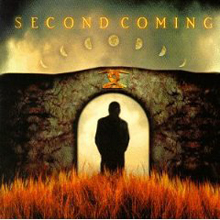
The Second Coming of Second Coming

• With two years of litigation now behind them, local hard rock heroes Yanni Bacolas and Travis Bracht get a few things off their chests.

by Steve Stav, for Rock Paper Scissors, Seattle, 2001.

To tell the truth, in the music business, every silver lining has a dark cloud lurking nearby – and the difference between a band succeeding and folding up their tent and going home comes down to how they weather the storm.

In 1998, Seattle’s Second Coming got the industry’s attention with their sludgy-yet-bombastic brand of hard rock – a revved-up, intense echo of this town almost ten years before. A bidding war ensued, and before Travis Bracht (vocals, guitar), James Bergstrom (drums), Dudley Taft (guitar) and Yanni "Johnny" Bacolas (bass) knew it, they were signed to one of the most prestigious labels in the world – Capitol Records.

Their self-titled major-label debut garnered critical acclaim and won over thousands of listeners; Second Coming had a slot on the "X Games" tour, the V.A.S.T. tour, the ’99 Marilyn Manson tour, and even had a song ("Unknown Rider") on the Sixth Sense soundtrack. Then, nothing. No one has heard a peep out of the band for awhile – rumor had it that the band was caught up in litigation with Capitol, and that their follow-up CD was on indefinite hold.

Perhaps emboldened by last month’s local shows with Queensryche (whose guitarist/producer, Kelly Gray, co-produced the Second Coming disc) and a wild solo gig at the Catwalk, Bracht and Bacolas decided earlier this week – in an often-heated, often-hilarious, obscenity-laced torrent of words – to spill the beans. In the following interview, they reveal the details of their battle with Capitol, of their as-yet-untitled forthcoming album (again co-produced by Gray), and of the "amicable" departure of Taft, well-known in Seattle for his previous involvement in Sweetwater.

SS: Actually, I didn’t know anything about Second Coming before today – I had heard the name tossed around a few times when I was writing for the Rocket, but that’s about it…

Bracht: At least you’re not blowin’ smoke, dude – "You guys are fucking great!" - it’s nice not to hear that, for a change.

SS: Anyway, I made a few calls, and everyone I talked to asked me what the hell happened to you guys. So, what the hell happened? Did Capitol do a number on your band, or what?

Bracht: Well, it’s the big "surprise, surprise’ story that you hear all the time – the changing of the guard. We got picked up by Capitol, by Gary Gersh, who was their President at the time. He had come out over a Passover weekend for our CD release party, and then they fought their asses off against Columbia to sign us.

We went with them because we liked Gary – we liked his style, he had a good track record, he had a really good team with him. He was a really well-trusted guy, one of the most down-to-earth guys in the business – we found that out after meeting a bunch of ‘em.

Anyway, after about six months after we got signed – we got a really good deal – there was a mutual split between him and Seagram’s(?), who I believe still owns Capitol. Once Gary left the office, his people followed him, so to speak – so it was definitely a changing of the guard. Out with the good, in with the bad was basically our situation – you get these replacements who haven’t heard of your band, and who couldn’t care less about you. We slipped through the cracks…all I know is that we toured for two years, busting our ass…

Bacolas: We were playing six nights a week.

Bracht: We upheld our part of the bargain, and Capitol dropped the ball. A new President came in – Roy Lott – and basically flushed us down the toilet. (Note: EMI executive Lott was filling in as interim Capitol President; Andy Slater is now Capitol’s President/CEO.)

SS: When did Capitol finally pull the plug?

Bacolas: They really didn’t pull the plug…

Bracht: We pulled the plug on them. I’m not going to get into the details, but they breached our contract…the bottom line is that we came out with clothes on our backs. We walked away with some money…

Bacolas: We settled with them.

Bracht: We came out on top. We got the right to our music back…everything in the building (Capitol’s offices in L.A.) with the name ‘Second Coming’ on it went back to us.

SS: Well, that’s good.

Bracht: Yeah, I don’t feel like this was a failure at all – I feel very fortunate. This shit happens all the time. We’ve seen the good side of the business, and the shitty side of the business, and we’re smarter now. We’re pickin’ up the ball and running with it again. It took a long time, because all of that legal shit – all of that red tape, is fuckin’ sick. ‘Forget about being a musician for the next two years’ is what we should have told ourselves in the beginning.

Bacolas: They had us in a legal vacuum for about two years. $30,000-plus in attorney fees later…

Bracht: I went into this thing without a lick of legal knowledge – I didn’t even know what a paralegal was. I’m fuckin’ Perry Mason now, I could go in and get O.J. off. (This elicits about 30 seconds of hysterical laughter from Bacolas and I SS). You really learn a lot…we finally settled this thing with Capitol, and we’ve been cleanin’ house. It’s like baseball or any other sport – if your players aren’t performing, you get rid of ‘em and find some players who can. It’s the same thing…after the Series, whoever wasn’t a contender has to look at their staff and make changes. We’re building all over again, and we’ve done it before. Just like Lou Piniella – he had the knowledge, he just needed the tools. We’re in the same kind of position – it’s just a matter of time before we get our fuckin’ Ichiro.

Bacolas: (chuckling) That would be in the form of a (label) president.

SS: I read an article on how you blew away Jon Crosby on the V.A.S.T. tour. How did you get that weird gig?

Bracht: This was when things were starting to change. You could feel the repercussions from the West Coast all the way to the East Coast, where we were trapped. We went from playing gigs with bands that it made sense to play with to headlining for some fuckin’ local bands in Toledo on a Sunday night. Then there was the V.A.S.T. thing…

SS: Do you have your second album in the can?

Bacolas: Half of it. Half of it has been recorded and mixed, the other half is in pre-production.

SS: Is Dudley Taft on the first half?

Bracht: No, absolutely not. Dudley’s not on any of it.

SS: When did you start recording?

Bacolas: We started recording in May. We were in pre-production before that; prior to that, we were dealing with a new guitar player, on top of all this legal bullshit.

SS: Initially, you paid for your first record’s production. Are you paying for the second CD as well?

Bacolas: That’s correct. This is all coming out of our pockets.

Bracht: The only difference now is that we don’t have to play in a cover band at night to pay for it. (The members of Second Coming once moonlighted as a cover band called FTA  — Funding The Album — to pay for the disc that would later be reissued by Capitol)

SS: Tell me about your new guitarist, Eric Snyder.

Bracht: Eric’s a stud. I can’t say enough about the guy. Eric’s more my kind of guitar player than Dudley is. Dudley wasn’t in the game for the Super Bowl…he was set, financially, and he wasn’t hungry like we were. Unfortunately, we didn’t find this out until the very end, when I had my hands around his fuckin’ neck.

SS: How did you recruit Snyder?

Bacolas: I came across a demo, by chance, of a local band that Eric was in. I played it for Travis one afternoon, and didn’t tell him who it was, because I knew Travis used to know him. He listened to the song and said, ‘Great song, killer guitarist – who is it?’ I told him, and Travis remembered him. We called Eric the same day. The rest is history.

Bracht: Yanni was getting threats over the phone from Eric’s old band…

Bacolas: They were pissed.

Bracht: Eric’s style is great – less is more. And he’s as hungry as we are.

SS: Where is your headquarters now?

Bracht: Our office and rehearsal space is in the basement of James’ parents’ house. The band’s been jamming down there forever, even before I came around.

Bacolas: It’s a comfortable environment – we have a pool, a sound-proofed room, an office – it’s nice.

Bracht: It’s huge. After we got signed, we thought of going somewhere else, but this place is free, it’s old-school, and we like it.

SS: How is the new album going to sound, compared to your last one?

Bracht: A lot harder.

Bacolas: A lot heavier. The guitars are really brought up in the mix.

SS: Second Coming made such a big impression on the industry – and you’ve said that you made some friends in the business. Is one of these ‘friends’ going to help you get this next record out?

Bacolas: We have a lot of contacts at various labels. A lot of labels have inquired as to what’s going on…we’ve been silent until we had the music where we wanted it. We’re getting ready to shop the band now…there’s still a lot of people around – here and elsewhere – who believe in us.

Bracht: And that’s really cool. Getting props from your hometown is the ultimate compliment. When we first started, we thought the town was pretty jaded – there was a lot of alternative bands – a lot of ‘Harvey Dangers’. We didn’t fit that mold, the ‘107.7’ crowd…we were kind of shuffled over to the KISW crowd, and that was kind of fading out.

Seattle was a tough town after the grunge thing went down, but now it’s very culturally diverse. We played a lot of great towns while we were on the road for so long, but we kept thinking, ‘There’s no place like home.’ Now that we’re making a comeback, it’s so good to know that we still have fans here.


Originally published in Rock Paper Scissors, Seattle, Sept. 2001.

copyright 1997-2011, Steve Stav